
Do I Need a Tree Inspection After Heavy Rains?
During spring in Brisbane, heavy rain isn’t unusual. After a big downpour, it’s easy to focus on flooded gutters or soggy lawns, but tree problems often hide in plain sight. Even when they look fine, trees can be under serious stress below the surface. The roots may shift. The trunk might lean. Cracks can form in branches, quietly setting up a problem for later.
This is where a tree inspection helps. It’s a way to check deeper than what we can see from the outside. A proper inspection after a storm or long rain gives you a chance to catch issues early. It’s not just about safety, though that matters too. It helps protect your trees before the spring weather swings into summer winds and more growth.
We look at what rain does to trees, what to keep an eye on in your garden, and what we check when we inspect after wet weather.
How Heavy Rain Affects Tree Health
When rain arrives in large amounts, trees have to deal with more than just wet leaves. The way water lingers in the soil around them can change how stable and healthy they stay.
- When the ground stays soaked, root systems can loosen. That makes trees feel less anchored, especially if wind follows the rain.
- Roots need air as much as water. Saturated soils shut out oxygen, which stresses the tree and sets the stage for root rot.
- Drooping branches, wilting leaves, or sudden leaf drop may show up days after the rain. Sometimes this is a response to trouble hidden deep below.
These changes don’t always happen overnight. Some trees react quickly, while others show signs slowly. Once soil conditions shift, the damage begins. Rain is good in the right dose, but too much too quickly changes the balance trees rely on.
Heavy rainfall affects everything connected to a tree’s support system. Extra water can change the way roots grip the soil, and this makes them more likely to shift when the ground softens. Big downpours also lead to soil erosion, which can expose roots or wash away the ground that offers support. Even after the rain stops, this wetness may stay near the tree roots for days, stressing the tree if it lasts too long.
Some trees may send up new shoots rapidly after heavy rain, trying to make the most of the water, but that fast growth isn’t always strong. New branches can be soft and more likely to break under their own weight. In some cases, fungus and mould spread where things stay damp, especially close to where rainfall has settled in dips near the trunk. Altogether, this hidden stress lays the groundwork for bigger problems if growth continues unchecked.
Warning Signs to Watch for in Your Yard
After rain clears, a tree might seem like it made it through fine. Still, there are signs that can hint at hidden problems. We recommend giving trees a quick check during dry breaks so you can spot anything off.
- A sudden lean or shift to one side, especially if that wasn’t there before
- Muddy circles or pooling at the base of the tree, with roots poking through soil
- Cracks running through nearby garden beds or soil pulling away from the trunk
- Freshly split limbs, small breaks near joints, or bark peeling away unexpectedly
If items around the base (like garden lights or paving) look shifted or lifted, it might mean root movement. Even if everything above ground looks steady, movement below may already be in motion.
Trees don’t always react the same way, either. Taller ones may tip, while smaller ones might settle deeper into soaked soil. Both can create long-term issues if not caught early.
Sometimes, the signs are even less obvious. Look for curled or misshapen leaves, which can be a sign the roots aren’t drawing up air as they should. If you notice mushrooms or new fungal growth near the base, this can mean the soil is staying too wet for too long. Regularly checking tree trunks for changes in colour, texture, or swollen spots can also help you spot early trouble before any major break happens. Listening for unusual creaks or groans from trees after a big rain or wind may also signal a problem.
What a Tree Inspection Looks For
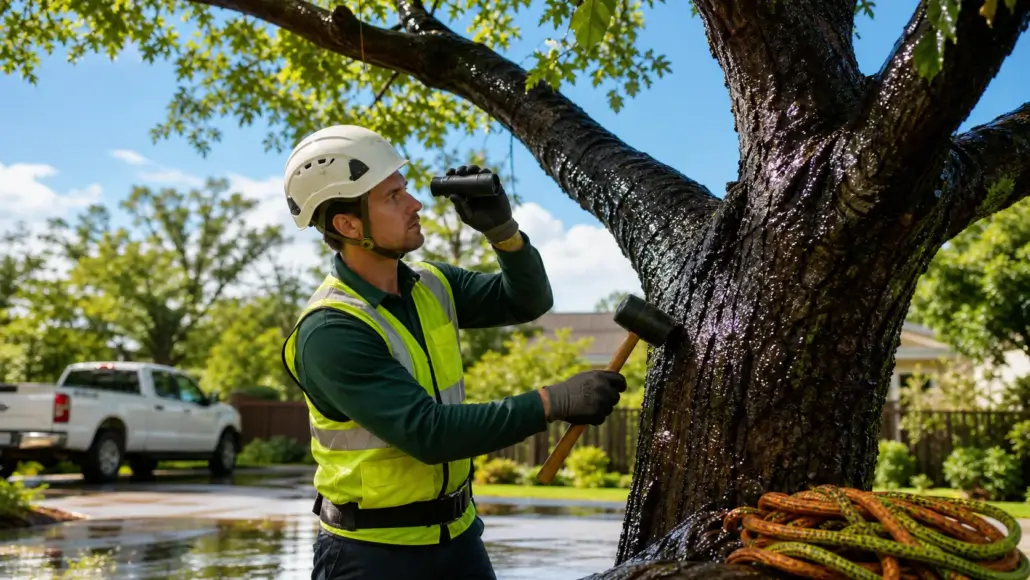
A proper tree inspection focuses on more than leafy branches or height. It starts with what isn’t always seen at first glance and moves upward, checking each part for signs of stress or weakness.
- The main joints and branch connections are checked. These areas often break when too much water makes wood soft or shifts weight unexpectedly.
- Ground level is inspected for fungi, soft roots, or decay that signals too much moisture has stayed too long.
- Some of the most telling signs are underfoot. Soil near the base is gently moved to look for unusual movement or gaps where roots may have shifted.
- The nearby space is examined. If branches hang near roofs, sheds, or electric lines, risks are spotted early so they don’t cause damage later.
Not all problems are big at first, which is why early inspections are helpful. A small crack or soft joint is easier to support than a tree that’s tipped entirely after the next storm.
When conducting a tree inspection after heavy rain, there are steps that always help us notice subtle but important clues. We start by looking at the base of each tree, gently probing the soil to find places that stay damp or swampy, which can hide rot or loosened roots. By tracing the trunk upwards, we can spot cracks or seams that might have started under the pressure of wetness and movement. As we move up each limb, our eyes check for areas where bark seems thinner, wetter, or falling away. The highest branches get a careful look, especially if you notice leaves drop suddenly or see patches that aren’t filling out as they should. If a tree sits close to buildings or fences, an inspection also covers these areas to make sure falling limbs or tilts won’t create further hazards down the line.
Why Timing Matters After Wet Weather
Spring rains in Brisbane often mark the start of wetter, busier months for plant growth. Trees use this time to push out leaves and stretch upward. That makes it an active period, and also one where any previous damage can grow quickly into bigger trouble.
- Looking at issues soon after storms keeps problems from quietly getting worse.
- Brisbane’s summers follow spring with stronger wind and heat. If trees are already weakened from spring rain, they’ll handle the next storm poorly.
- Spotting root rot, trunk cracks, or slumping early gives plants more time to recover while the weather is still mild.
Waiting two or three weeks after a big storm might seem fine, but damage often builds silently during that time. A bend becomes a lean. A line in the bark becomes a split. Trees under stress during growth don’t always bounce back on their own.
If you can, try to inspect your trees within a few days after heavy rain, as this is when weaknesses or changes are most obvious. Check again a week later to make sure nothing has worsened as the ground dries out. Holding off too long means missing those first small signs that can be fixed before becoming more costly issues. In Brisbane, plants grow quickly in late spring, so a simple walk and check while the weather is still warm and mild can make a bigger difference than you might think.
Spring doesn’t just bring wet weather but helps trees recover quickly if problems are caught early. Trees are naturally sending out new leaves and roots right now, so supporting them soon after storms gives them the best shot at bouncing back before the hotter weather arrives.
Better Safety and Tree Health Through Simple Checks
Brisbane gardens change quickly in spring. The mix of rain and warm days leads to fast growth. So does the risk of trouble. Every rainfall is a chance to check what changed and act before the signs get too loud to ignore.
- A regular walk through the yard straight after each strong rain gives a clearer picture of what’s different.
- Tree inspections during spring help find hidden stress your trees may be carrying from one storm to the next.
- Not every issue is loud or dramatic. It’s often the quiet cracks, the soft wood near roots, or the slow shift in shape that gives away problems forming below.
Catching these early makes a difference. Acting before there’s visible damage means smaller fixes and a better chance to save the tree and protect what’s nearby. Getting into the rhythm of checking trees after heavy rain makes it easier to stay ahead.
Spring is ideal for this kind of care. The weather gives trees the best chance to respond to support before summer winds return. Simple checks and attention go a long way in keeping trees upright and healthy.
If you make checks a habit, you’ll get a feel for each tree and spot the changes sooner. It can be as easy as taking a slow walk after a rainfall and looking up into the branches for anything new or unexpected. Listen for changes, look for fresh splits or a change in the angle of growth, and keep an eye on how close your trees are to sheds, lights, or other important spots in the garden. Each check in spring not only protects your trees as the season changes but also helps prevent damage to your home, car, or fences.
After a wet spring in Brisbane, it’s wise to take a closer look at your trees for signs of leaning or softening at the base. Early detection makes all the difference in avoiding issues when stronger winds hit. We recommend scheduling a proper tree inspection so you have peace of mind before the next change in weather. At TPS Tree Services, your safety and the health of your trees always come first, give us a call and we’ll help you assess what needs attention.